This
week we got to observe mini lessons on topics that could be used at the grade
seven and eight level. Although these
are not the grades I wish to teach in the future, I definitely appreciated the
different ideas that my peers brought to the class and can definitely think of
ways to integrate their ideas into different grade levels.
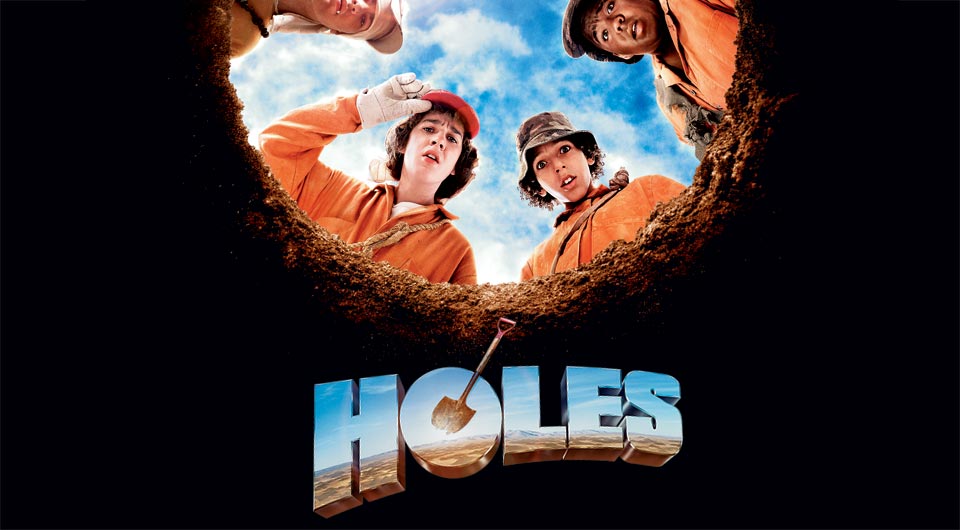
Holes
The
first presentation was a real-world problem that approached the concepts of
conversion and volume in an interesting way.
Students were to use the story
from the novel and movie “Holes” to determine how many of X-Ray’s holes Stanley
could fill in a year if X-Ray’s shovel was an inch shorter than Stanley’s. I thought this was such a cool idea because
it had a practical purpose to it and if one was invested in the plot (like most
of our class was growing up), it was definitely motivating to try and
answer. If I were to use this idea in
the future, however, I would make some changes.
I would definitely pick a real world application that had more significance
to my students. This story was a great
pick for our class, but for today’s generation, they may not have even heard of
it. Also, the amount of conversion from
metric to imperial units was a bit problematic for me. Either I would decide to completely leave
those conversions out, or instead, make this idea more of a paired performance
task where students have to work with things that are foreign to them and try
to solve the problem. Lastly, the presenter
brought in measuring cups to visually represent what the holes looked like and
the difference between X-Ray and Stanley’s holes. However, he didn’t go into much detail about
it. I would have loved to see what he
could have done with those manipulatives to help students understand better.
 |
| Retrieved from: https://www.walden.com/wp-content/uploads/2003/04/holes-hero.jpg |
The Adventure of Steve the Stick Figure
 |
| Retrieved from: http://images.clipartpanda .com/sad-girl-stick-figure-image.png |
The
second presentation followed Steve the Stick figure and his adventure around
the classroom to teach transformations.
Students would start at one station and would have to determine what the
transformation at the station was asking for, and where Steve (the coordinates)
would end up. After travelling around
the room, students would answer some questions on their sheets using words
instead of numbers and transformations.
I really enjoyed this activity as well!
I think it’s a great idea to get students up and moving around the
classroom. However, if I were to use
this idea in the future I would make some changes. I might consider doing this activity in a
larger room, so that students would have more room when at the same
station. As well, depending on the
behaviour of the students, I would even consider doing this activity around the
school – I think students would have a lot of fun travelling to different
locations in the building. I would also
be wary on what the symbol was that we are transforming. In this case it was Steve the stick figure
where there was a “head” and a “butt.”
Sometimes this was confusing to keep track of when drawing. I would maybe consider changing the shape for
next time.
The Game of Life
The
third presentation was the game of life!
This activity taught idea of percents, ratios, and rates in a practical
real world situation. I thoroughly
enjoyed this activity. Each table (or
family) was given a career and a monthly salary. Each “month,” the families would have to pay
their rent and internet charges. After
that, they would have to buy clothes and food for their family; however, there
were flyers with coupons for certain percentages off as well as sales. Lastly, families would have to save some
money in the bank each month for future uses.
At the end of the game, it was shared what families had what incomes and
who was struggling to pay their bills. I
thought this was a fantastic activity that I will definitely use again in the
future. A lot of the time, students don’t
understand why they learn the things they do because they don’t feel like they
will ever use it again in the future.
This is such a practical day to day application that students will
actually learn from and use in their future!
If I were to use this in the future, I would make some small
tweaks. I would definitely make the
groups a bit smaller than we had them. I
think groups are good for discussion and debate on how money should be spent
but more than 3 per group is too many voices in my opinion. As well, I would have everything pre-arranged
in folders and each group would be given a folder with their details as well as
flyers and sales for the following months and students would instead have to
budget their pay for the next year. This
may become more of a performance task type activity, but I think that the
general discussion they would have, and the experience of budgeting for a
longer period of time would be a great experience for students to have.
 |
| Retrieved from: http://cdn.edgecast.steamstatic.com/steam/apps/403120/header.jpg?t=1465471547 |
Battleship
The
final presentation was also a great one!
This presentation provided a fun way to approach practice drills of
solving single variable equations. Everyone
was given a 7x8 grid and basically played the game Battleship in pairs. The catch was, if you hit your opponent’s
ship, you had to correctly solve an equation for x in order for your hit to
count. I really enjoyed this game! I thought it was a lot of fun and as a very
competitive person, I was very motivated to keep playing. However, if I were to use this idea in the
future, I would definitely make some changes to the handout. The activity itself was wonderful, however,
as time went on, our battleship sheet began to get very confusing, and our
equation sheet was forgotten. Instead of
having the two on separate sheets I would have combined the equations with the
grid so that in each box there was an equation to be solved. This way, instead of switching back and
forth, the questions would be present in each box if that box was
selected. I would also make a much
smaller grid in the corner of the page for students to put their own ship’s
placement. Having to share where you had
guess AND where your opponent had guessed on the same grid got confusing
fast. By separating the two, it would be
much easier for students to keep track of what was happening.
 |
| Retrieved from: http://static.kidspot.com.au/cm_assets/32032/battleship-game-main-jpg-20151022131744.jpg~q75,dx720y-u0r1g0,c--.jpg |
Overall, I really enjoyed all of the
activities that were shared! I can
definitely see myself using all of these ideas in the future!

No comments:
Post a Comment