Weekly
Overview
This week’s class mainly focused on what
teachers can expect to find in the mathematics curriculum documents for grades
1-8, 9-10, and 11-12. We discussed the
different strands that are found in most high schools, including prerequisites
needed and post-secondary options. We
also reflected on the different math processes found in the curriculum. These processes include problem solving, reasoning
and proving, reflecting, connecting, communicating, and selecting tools and
computation strategies. To finish up,
the class worked in groups to try to solve a math-logic skyscraper puzzle, without
being given any instructions, in order to reflect on our own learning strategies
and how they relate to the math processes previously discussed.
Are
there instances from the activity that will help you think differently?
I was surprised to learn a lot from the
skyscraper puzzle! When the activity was
first given out, there was not any instruction provided. We were only given handouts that looked similar to
this:
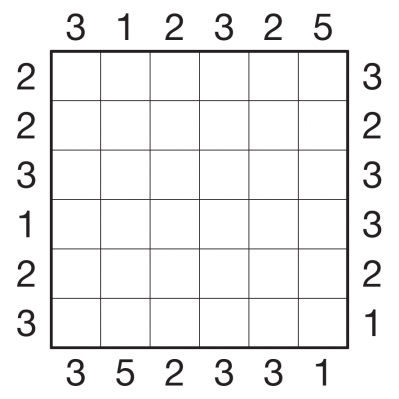 |
| Retrieved from: http://www.anypuzzle.com/puzzles/logic/Skyscraper/example-big.png |
Now if I’m being completely honest, I’m
still not 100% clear on what the correct instructions are! The little guidance that we later received was that
if a person was standing on a number and looking towards the boxes, the number
of blocks they would “see” should be the same number they are standing on. The actual instructions differ slightly,
however the underlying idea is the same (I will link the actual instructions at
the end of this entry).
As
my group and I continued to attempt the puzzle (with no success), our
instructor walked by to check our progress.
In doing so, she let us know that she had previously used this activity
on young elementary school students, and many of them were able to figure out
the problem with no problems or need for guidance. Yes, you heard that right. Seven to ten year olds could figure this
puzzle out but my peers and I, who have degrees in mathematics, were completely
stumped.
This
made me think a lot about differentiated learning. The way that I learn and understand things is
very different from the way others may learn.
This is extremely important to remember as a future teacher. The instruction I received when I was in high
school may have worked for me and my fellow students, but that might not be the
case in today’s schools. There are some
students who thrive with minimum instruction, and others who are completely
lost. Not every student is the same, so
not all students learn the same. It’s
tremendously important that as I create lesson plans, I consider what I’ve
learned here for my future students.
Now,
although I had a difficult time with the skyscraper activity, it was fun to do –
which reflects on my teaching philosophy!
Not only was this a fun and memorable puzzle to do, but it also
challenges students on some of the math processes we had discussed prior to
doing the activity. Through the use of
this puzzle, I believe that students will develop their problem solving, communication,
and reasoning skills. In the real world,
students are not always going to be handed step-by-step instructions on how to
solve every problem they run into. By
doing this activity without being given any instruction, students must figure
out what they already know and how to use what they know to solve the
problem. While working in groups,
students need to effectively communicate their ideas to the peers and reason
with them about why their ideas make sense.
This allows students to learn new things, solve problems, and develop
their math processes, all while being unaware due to the fun they are having.
Overall, this was an activity that I
will definitely keep in my back pocket to use in the future, and I think that
others should too. If you are reading
this and are interested in trying these puzzles for yourself, here are some links
that let you try them online:

No comments:
Post a Comment