Saturday, October 29, 2016

~My Weekly Report and Reflection 6~

This week was a little bit different from most weeks.  To start off, we received feedback on the lesson plans we had created for a future math class.  Besides this feedback, we were challenged to create a script on how a section of our lesson plan could play out.  This is what my partner and I came up with:


Retrieved from: www.wodb.ca

[Teacher walks in and puts warm-up question on smart board (question above)]
[Students work on question]
~3 minutes pass~
Teacher: Okay class, wrap up your thoughts.
~1 minute passes~
Teacher: Okay, so how many said the top left doesn't belong? [students raise hands] Who said the top right doesn't belong? [students raise hands] Who said the bottom left doesn't belong? [students raise hands] Who said the bottom right doesn't belong? [students raise hands]  Who found that maybe more than one may not have belonged? [students raise hands]  Why?  Someone tell me what they think.
Timmy: The bottom right one doesn't belong because it's the only one going down.
Teacher: Right, good observation.  Who else had Timmy's answer?  [students raise hands]  Good start!  What other answers did everyone else get?
Tina: The top right one goes through the middle!
Teacher: Don't they all go through the middle?
Tina: ...no.
Teacher: Well what do you mean by middle?  I assumed you meant the middle line, so the y-axis.
Tom: I think she meant the origin!
Teacher: Oh!  Well, that makes sense then!  Good job Tina and Tom!  What else did everyone get?  What about the bottom left?  Tyler, what do you think about the bottom left?
Tyler: I dunno... it looks like it's the closet to the bottom?
Teacher: That's true.


This is where we got stuck.  We wanted to help lead the student to the answer, without actually giving anything away.  We realized that this is a common difficulty for many teachers.  As teachers, we want to help students create their own knowledge, but by already knowing the answers and being taught by traditional methods, this can sometimes prove hard to do.  This challenging activity will definitely stick with me and influence my future lesson planning sessions.

Tuesday, October 25, 2016

~My Weekly Report and Reflection 5~

Weekly Overview

            This week we mainly focused on using different forms of technology in the classroom – which was very exciting because I am always interested in and looking for new fun and interactive tools to use in the classroom.  This is especially important in today’s society, where technology is playing a larger role in our day-to-day lives.  However, before we dove into technology we played a math version of the game “Hedbanz.”  Although it didn’t use technology, I thought it was a very fun activity to use as a warm up or even to consolidate knowledge at the end of a lesson.
Retrieved From: http://www.toysrus.com/graphics/product_images/pTRU1-6927051dt.jpg
            For those who don’t know how to play “Hedbanz,” each person receives a headband with a card attached.  Without looking at the card, players are to place the headband around their head so that the card is on their forehead.  The goal is to ask your peers yes or no questions in order to figure out what is written on your card.  In our case, everyone had a different quadratic equation on our cards.  Some questions we asked each other included: am I in standard form?  Factored form?  Vertex form?  Do I open upwards?  Downwards?  I thought that this was a great activity to have students recall what they’ve learned in a way that not only gets students up and moving, but is fun, interactive, and doesn’t really feel like learning.

What is something done this week that you will remember and use in your classroom?

            Being truthful, this is not the first time that I have learned about implementing technology in a math classroom.  In my undergrad, I was required to take a course entitled Technology and Mathematics Education.  You can guess what we talked about all year.  That’s why I wasn’t surprised to hear a lot of the things we discussed.  For example, children are beginning to use technology at younger and younger ages.  As well, most school boards are now starting to enact BYOD (Bring Your Own Device) policies in able to encourage the use of technology in education.  However, I always had a problem with the different examples of online tools provided to me.  Many of these tools seemed to be really boring.  If anything, they were just the same pencil and paper, repetitive drills that are traditionally done in schools, but with a cool theme to it.  Just because something is online, it does not make it any more fun – it’s just an illusion to look fun.
            That’s why I was excited to learn about the SAMR Model.  The SAMR Model is a framework for evaluating online games or apps and can be used for all subjects.  Developed by Dr. Ruben Puentedura, SAMR is an acronym for Substitution, Augmentation, Modification, and Redefinition (Walsh, 2015).  The model aims to help teachers move away from technologies that simple substitute a computer for pencil and paper, towards technologies that redefine what it means to learn something.  Technologies that are classified under Redefinition introduce new ideas to learning that can only be done through that specific technology.  This is definitely something that I will remember as a future educator.  Although using technology to do drill exercises may be more appealing than doing them by hand, it’s important that I seek out, or even try to create, online resources that provide students with new opportunities and experiences of learning math.  In a subject that receives a lot of negativity, I think that introducing something that is new and interesting would be a great way to increase students’ engagement and interest in math.

SAMR-model
Retrieved From: http://www.emergingedtech.com/2015/04/examples-of-transforming-lessons-through-samr/

For more information about the SAMR Model, a great resource that I used in this post was: http://www.emergingedtech.com/2015/04/examples-of-transforming-lessons-through-samr/ .  In it, Kelly Walsh provides a number of different examples, in different subject areas, in order to help teachers understand the model and embrace it in their classrooms!

Wednesday, October 12, 2016

~My Weekly Report and Reflection 4~

Weekly Overview

          This week we focused on a resource provided to us called gap closing.  Gap closing assists teachers in diagnosing the specific areas that students struggle in.  By doing so, this allows teachers to better differentiate learning for those students who may fall behind their peers.  The website www.gapclosing.ca provides teachers with resources for diagnostics as well as different catered intervention materials.  I really liked this resource because not only is it applicable to those students who are struggling and in need of extra assistance, but it can also be used for all students in a classroom that is at a lower development level than others.  By doing so, the teacher is able to cater his or her instruction to not only one individual, but every student in their class.  This helps to make differentiated instruction a lot easier for teachers when lesson planning.  Lastly, to assist us with our present lesson planning and for more ideas in the future, our teacher provided with the websites: http://www.mathalicious.com/ and http://www.yummymath.com/ .  Mathalicious and Yummy Math give teachers really cool ideas for ways to apply mathematical lessons to the real world.  I really like these sites because sometimes I struggle with thinking of real world applications for some math concepts, so it has proven to be very helpful during my lesson planning processes!

What was your favourite part of the week?

          Although we did not spend a lot of time dedicated to it this week, we received another resource that teachers could use as a potential warm up/start up activity.  This week, the website is www.wodb.ca .  This site includes hundreds of puzzles that vary in difficulty as well as subject matter (shapes, numbers, and graphs).  The idea of the activity is to give an explanation why one of the quadrants does not belong.  The catch is that there is at least one valid reason why each shape might not belong.  Here is an example of one of the puzzles:

Retrieved From: http://www.wodb.ca/shapes.html
> The top left rectangle might not belong because it is the only shape without four equal side lengths.
> The top right square might not belong because is the only grey shape.
> The bottom left square might not belong because it is the only shape that is resting on a vertex. 
> The bottom right pentagon might not belong because it is the only shape that has five sides.

I really love this style of question as a warm up question because it ties into a lot of the concepts we’ve discussed over the past couple of weeks.  The way that the question is asked, it alludes to an open style question.  The students can pick any of the quadrants and as long as they are able to justify their answer, they will always be correct.  In addition, it caters to the different learning styles and can therefore be considered as a form of differentiated instruction.  Students can look at how the different items look, what their technical name is, or even their mathematical purpose.  Because of this, every single student can provide an answer and an explanation, no matter how they learn or their developmental level.  That is why I love this resource for warm ups more than any other resource provided thus far.  In a subject that students hate and fear, they do not have to be afraid to give their opinion, because they will always be right – thus building confidence in students.  And without a hint of confidence, students have no chance to become invested and excited to learn mathematics.

Tuesday, October 04, 2016

~My Weekly Report and Reflection 3~

Weekly Overview

          This week began with our teaching showing us some new resources for warm up/start up questions.  I loved the ideas and questions provided by both of these sites so I will attach them at the end of this post.  For the remainder of the class, we discussed the goals of teaching mathematics and how differentiated instruction is vital to these goals.  This discussion included different strategies and examples of how to use differentiated instruction in the classroom.

What is something this week that you will remember and use in your classroom?

          As I mentioned above, this week we discussed the importance of differentiated instruction.  I always knew how important differentiated instruction was, but I never felt as though I was given a significant amount of education on the topic.  This class I learned that there are two goals of teaching mathematics: consider the needs to address all learners and make sure the math focused on is important.  Basically, the first goal states that as teachers, we need to consider differentiated instruction all the time.  Prior to this class, I had previously believed that differentiated instruction was only during the process of teaching or when choosing assessment methods – I now know that this is not the case.  Especially in a subject that so many students have difficulty in.  As a teacher, when planning lessons, I need to consider a student’s readiness to learn, their individual interests, and how each student learns best.  Although it is a lot to consider, it is also important to remember how important it is in determining each student’s success.
         Thankfully, we learned different strategies on how to ask students questions that foster all of the different learning styles.  These include: open questions and parallel tasks.  Although I’ve talked about open questions in a previous post, I am starting to recognize how useful of a tool they are in a classroom due to the number of opportunities that these types of questions welcome in the classroom – and that’s just from wording a question a certain way.  For example, I could give a class two triangles that look like these:
Retrieved From: https://upload.wikimedia.org/wikipedia/commons/thumb/1/12/Congruent_non-congruent_triangles.svg/2000px-Congruent_non-congruent_triangles.svg.png
By just giving them this picture, I could ask them, “What do these triangles have in common?  What makes them different?”  From these simple, open-ended questions, students with different learning styles all get a chance to inquire and develop their math processes.  Students have the opportunity to reflect on what they know about triangles, make inferences and reason, connect to other concepts, and communicate their ideas.  All of that, just by wording a question a certain way.
          Parallel tasks are also a great tool to use when trying to cater to the different levels of learning.  This is especially useful in a classroom that might contain two different grade levels (ie. 7/8 split class).  Parallel tasks are two or more tasks, each at different developmental levels, that all question the same big idea or concept.  An example given was:
Amy Lin (September 28, 2016) - Week #4 Powerpoint
I love this question because it is basically the exact same question, simply two different shapes.  However, there is a large difference in difficulty levels.  In the curriculum, the area and perimeter of a circle is not taught until grade eight, whereas the area and perimeter of a rectangle is taught much earlier than that.  Without realizing, students are getting a form of differentiated learning, just by altering the question slightly.  One thing that I was worried about when we were discussing parallel tasks is that students will just take the simpler question.  I was surprised to learn that this actually isn’t the case – students typically take the question that suits their development level.  I also love these types of questions because even though a student might be able to answer a more difficult question, they might not want to.  Students have their own personal lives and that often influences the extent in which they want to engage in their schoolwork.  So if something is going on in their life that makes them not want to try in class, it is not possible for them to get in trouble for a lack of trying.  They can choose to do the simpler question one day, while still getting the benefits from the lesson.  Similar to open-ended questions, the opportunities these strategies provide are endless.

          Overall, I am very pleased with what I have learned this week.  I feel like I have gotten some more ideas on how to differentiate instruction in my future math classrooms.  However, this does not stop me from worrying about being able to cater to each of my students’ individual learning profiles and where I will find the time to do it – but I think that this is just a worry that will have to go away with time and experience.  I look forward to learning more about differentiated instruction and beginning to look towards differentiated assessment in math classrooms.  For those interested in the warm-up questions mentioned earlier, below are the links:

Tuesday, September 27, 2016

~My Weekly Report and Reflection 2~

Weekly Overview

            This week’s class began by answering some misconceptions about last week’s skyscraper activity.  This activity was being confused as having an open-ended question style instead of the exploratory style it was.  In order to show the difference, the class was put in groups and each person was given a random word or number.  The goal was to create a sentence describing our group by using each word or number at least once.  This was a great example to help clarify what constitutes an open ended question.  From this activity I learned that the opportunities were endless.  No two groups came up with the same answer.  By using open-ended questions, students are given completely free reign to create whatever they desire.  This differs from the skyscraper activity last week.  There was a certain way to complete the activity; however, we were not given those instructions.  The goal of this activity was to instead foster an exploratory or inquiry-based learning environment.  Although this was only a small part of our class, it did help clarify two very different yet equally important teaching styles that I hope to use in my future classrooms.
            For most of the remaining class time, we discussed the readings assigned: Relational Understanding and Instrumental Understanding by Richard Skemp (2006) and An Alternative Reconceptualization of Procedural and Conceptual Knowledge by Arthur Baroody, et al. (2007).  In groups, we discussed what we knew, what we learned, misconceptions, and remaining questions (I learned a lot from these articles, which I will address later on in this post).  Lastly, in the few remaining minutes at the end of the class, we were shown a few examples of different manipulatives that could be used in high school classrooms and were given a chance to explore them.

What did you learn/notice this week and how will it be useful to you?

            The most significant ideas that I can take away from this week are the ideas from Skemp (2006) and Baroody, et al.’s (2007) articles about procedural and conceptual knowledge and understanding.  Baroody (2007) defines procedural understanding as “knowledge of the procedure” and conceptual understanding as “knowledge of concepts and principles.”  To put it even simpler, procedural understanding is knowing how to properly do the steps, whereas conceptual understanding is understanding why we do these steps. 
Retrieved From: http://28htv21jkhic1fkybe2p0zo3lka.wpengine.netdna-cdn.com/wp-content/uploads/2015/01/procedural-and-conceptural-boxing-gloves.jpg

Growing up, I never really knew that there were two different types of understanding.  To me, understanding meant that I knew the steps and got the correct answer.  So looking back, procedural understanding was the most important.  As I began university and began taking education courses, I learned about the importance of conceptual understanding.  It started to become drilled in my head that conceptual understanding is the most important thing that students must take from their education.  However, this contradicted the way that I had always been taught.  I had always felt uneasy, because I still saw the importance of procedural knowledge and understanding, however, now I was supposed to focus more on conceptual understanding?  These readings were like the light at the end of the tunnel for me.  Skemp (2006) and Baroody (2007) taught me that although these are different concepts, they need to work together in order for a student to learn mathematics. One is not better than the other, nor should one be preferred over the other.  By working in tandem, students will gain the most from their education.  By teaching both procedural and conceptual understanding, not only will my future students be able to use the proper steps to solve a problem, but they will be able to look at their solution and answer the question, does this make sense? 

Are there any questions that you still have?

            Although we did discuss it this week, I do wish that we spent more exploring and using manipulatives.  Thinking back to my elementary and high school experiences, I cannot recall ever being given the opportunity to use manipulatives in my math classrooms.  Therefore, I have very little knowledge and experience on when to use manipulatives or even how to use them properly.  This was evident when we were given time to explore some manipulatives – I had no idea how to start some activities.  I knew how to answer the question with a pencil and paper, but I had no idea how to even attempt to answer it using the manipulatives.  This is unfortunate because I believe that manipulatives can be such a great tool for students to not only solidify their procedural understanding, but also their conceptual understanding.  It almost scares me that although I badly want to have these resources available for my students to use, I have almost no idea how to use them.  For this reason, I wish I was provided with more examples of manipulatives and the proper way to use them in a classroom.
Retrieved From: http://www.rainbowresource.com/products/mkcmmk.jpg

Tuesday, September 20, 2016

~My Weekly Report and Reflection 1~


Weekly Overview

This week’s class mainly focused on what teachers can expect to find in the mathematics curriculum documents for grades 1-8, 9-10, and 11-12.  We discussed the different strands that are found in most high schools, including prerequisites needed and post-secondary options.  We also reflected on the different math processes found in the curriculum.  These processes include problem solving, reasoning and proving, reflecting, connecting, communicating, and selecting tools and computation strategies.  To finish up, the class worked in groups to try to solve a math-logic skyscraper puzzle, without being given any instructions, in order to reflect on our own learning strategies and how they relate to the math processes previously discussed.

Are there instances from the activity that will help you think differently?

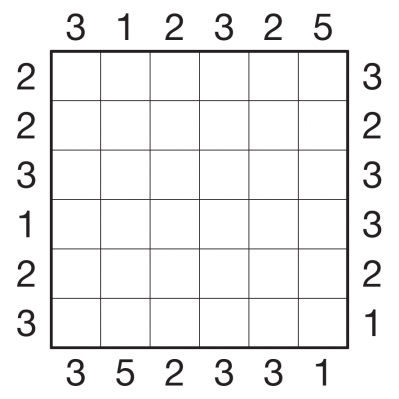
I was surprised to learn a lot from the skyscraper puzzle!  When the activity was first given out, there was not any instruction provided.  We were only given handouts that looked similar to this:
Retrieved from: http://www.anypuzzle.com/puzzles/logic/Skyscraper/example-big.png
Now if I’m being completely honest, I’m still not 100% clear on what the correct instructions are!  The little guidance that we later received was that if a person was standing on a number and looking towards the boxes, the number of blocks they would “see” should be the same number they are standing on.  The actual instructions differ slightly, however the underlying idea is the same (I will link the actual instructions at the end of this entry).
            As my group and I continued to attempt the puzzle (with no success), our instructor walked by to check our progress.  In doing so, she let us know that she had previously used this activity on young elementary school students, and many of them were able to figure out the problem with no problems or need for guidance.  Yes, you heard that right.  Seven to ten year olds could figure this puzzle out but my peers and I, who have degrees in mathematics, were completely stumped.
            This made me think a lot about differentiated learning.  The way that I learn and understand things is very different from the way others may learn.  This is extremely important to remember as a future teacher.  The instruction I received when I was in high school may have worked for me and my fellow students, but that might not be the case in today’s schools.  There are some students who thrive with minimum instruction, and others who are completely lost.  Not every student is the same, so not all students learn the same.  It’s tremendously important that as I create lesson plans, I consider what I’ve learned here for my future students.
            Now, although I had a difficult time with the skyscraper activity, it was fun to do – which reflects on my teaching philosophy!  Not only was this a fun and memorable puzzle to do, but it also challenges students on some of the math processes we had discussed prior to doing the activity.  Through the use of this puzzle, I believe that students will develop their problem solving, communication, and reasoning skills.  In the real world, students are not always going to be handed step-by-step instructions on how to solve every problem they run into.  By doing this activity without being given any instruction, students must figure out what they already know and how to use what they know to solve the problem.  While working in groups, students need to effectively communicate their ideas to the peers and reason with them about why their ideas make sense.  This allows students to learn new things, solve problems, and develop their math processes, all while being unaware due to the fun they are having.

Overall, this was an activity that I will definitely keep in my back pocket to use in the future, and I think that others should too.  If you are reading this and are interested in trying these puzzles for yourself, here are some links that let you try them online:

Monday, September 19, 2016

~Introducing Me~

My name is Heather.  I am currently a teacher candidate at Brock University, enrolled in the Intermediate/Senior Concurrent Education Program.  I have a Bachelor of Science, concentrated in Mathematics, with a teachable for Biology.

Math is typically considered a boring and useless class for many high school students and I want to challenge that assumption.  Similar to most of my peers, math has always been a fun and interesting subject for me growing up.  In high school I could never understand why my fellow students hated going to math class - it was always my favourite part of the day.  For these reasons, I want to inspire students' curiosity and desire to learn mathematics by making lessons fun and exciting.  I firmly believe that when students are enjoying what they are learning, they are not only more likely to engage in the material they are learning, but they are also more likely to remember it in the future.  In order to do this, I am excited to gain inspiration, not only from my courses, but from the teachers and students I will get the pleasure to meet and learn from during my practicum experiences.


This blog is for me to reflect and record what I learn from both my classes and my practicum experiences and discuss how they have influenced my views on teaching.