Saturday, March 04, 2017

~My Weekly Report and Reflection 13

This week was the final week of presentations and the final class!  I know, it’s so sad!  This week we got to observe mini lessons on topics that could be used at the locally developed levels.  This includes grades 9 and 10 locally developed, as well as 11 and 12 workplace.  I definitely appreciated the different approaches that my peers took and can definitely think of ways to integrate these new methods into my future teaching!
The first presenter’s topic focused on financial literacy at the grade 11 workplace and everyday life level.  Students got to decide whether they wanted to plan a Friday night out to the movies or out bowling.  We decided to go to the movies.  The activity was divided into six sections.  First we were to pick a budget.  How much were we willing to spend on this night out?  The second step was to determine our destination.  This included picking a theatre and finding its address.  Step three focused on transportation.  We were to calculate the distance from school to the theatre and pick two different methods of transportation and find out the cost to take each method.  After comparing the two costs, we had to weigh the pros and cons of each and pick the method that worked best for us.  Step four and five focused on the movie itself.  Which movie were we going to see?  How much did tickets cost?  Are we going to eat there?  What are we getting?  How much is it going to cost for food and drink?  The final step had us adding up our different costs to determine the total cost of the entire trip.  After finding the cost, we were to compare it to our budget.  Thankfully, we had a bunch of movie passes and gift cards so our total only came to $1.42 for the round trip car ride!  I really enjoyed this activity, especially for this level of class.  This is math that students are going to use in their life when they make plans with their friends, exactly like this activity did!  The only minor tweak I would make to this activity is giving students access to technology – given, most students will have their phones on them, however, not all do.  This activity requires some research in sections, so by making sure technology is available to all, it’s guaranteed that everyone can participate.

Retrieved from: http://www.allrangemode.ca/photos/podcasts/237.jpg

          The second presenter also did an activity about planning a trip; however, this was intended for the grade 10 locally developed level.  Groups of two were given small piles of different departure and arrival times.  The first part of the activity was to randomly select one from each pile and calculate the duration of the trip three times.  The second part of the activity was to pick the travel time that we liked the best and plan a trip using the different transportations provided (we were given bus, plane, and train schedules).  That was it!  Such a simple idea, but it really helps student develop these necessary real world skills while letting them be creative at the same time!  The one thing I didn’t really like was that it was almost too much free reign (not to contradict myself).  My group and I got confused a couple of times.  Was the duration that we were given to plan the trip, was it for the entire trip? Or just a one-way travel?  For example, we initially picked a duration of 3 hours, knowing that that was a plane ride to Cuba, however, it didn’t include driving to the airport and resort.  We tried with a different duration of 11 hours.  This time we planned on taking a bus to the GO train, taking the train to Toronto, and walking from the station to our destination.  We then planned our activities for the day and the return transportation.  We weren’t sure which was technically correct.  Therefore, I really enjoyed the idea of this activity, I’m just not sure how I would tweak it if I were to use it in the future.

Retrieved from: http://quirkcars.com/wp-content/uploads/2016/03/road-trip.jpg


Overall, I really enjoyed the topics this week!  I cannot wait to incorporate these ideas, and all of the ideas from the previous weeks, in the future!

Sunday, February 26, 2017

~My Weekly Report and Reflection 12~

This week I and two of my peers presented on topics at the college and workplace levels.  I definitely appreciated the new approaches that my peers took and can definitely think of ways to integrate these new methods into my future teaching!

The first presenter focused on compound interest for a grade 11 college level class.  He started the lesson by first going over the formula for compound interest, indicating what each variable stood for and reminding us of certain ways things are added into the formula (ex. interest is in decimal form, time is in number of times per year, etc.)  He then applied the lesson to the real world by having the students look at different types of payment methods when purchasing a brand new $2000.00 TV.  Each table received a different method and had to calculate what the interest would be, any applicable fees, any benefits or cash back, and the total cost to buy the TV.  After some time to do calculations, everyone shared their answers and as a class we discussed the different benefits of each payment method.  I really enjoyed this presentation because although it was simple, it touched upon a subject that many students will enjoy learning about and will apply to their everyday life as they grow older.  There’s not much that I would change with this activity.  I would maybe try to incorporate technology and have students research the different credit card companies themselves, or allow them to select certain ones in class and research it together – this way students can investigate the different types of credit cards they are actually interested in and may have in the future.  A small concern was that when given to groups, not every person was a contributing member.  In our group there were 5 of us and only 1 or 2 people really wrote out the formula and did the calculations – there just wasn’t enough work to be spread around.  In the future I would maybe alter it to accommodate for that concern.

Retrieved from: http://www.greedyrates.ca/blog/wp-content/uploads/2015/01/credit-cards-123.jpg

The second presenter did an activity focusing on experimental and theoretical probabilities in a grade 12 workplace and everyday life level class.  She did this by using the card game Blackjack.  Each group was given a deck of cards.  The rules of blackjack were quickly explained – if you get an ace and any card with a value of 10 (10, J, Q, K), that is 21 points, or blackjack, and you win.  If you go over 21 points, you bust or lose and if you’re under 21, you still have a chance of winning, as long as your value is higher than the dealer’s.  For the first part of the activity, we simply had to see how easy it was to get a blackjack with only two cards.  For our table, this resulted in 0 blackjacks in 50 trials.  The highest a table got was 2 blackjacks in 50 trials.  This gave us our experimental probability.  We then checked our theoretical probability by calculating the probability of drawing an ace followed by drawing a value 10 card and multiplying it by 2 for symmetry.  This was cool because we could compare what we actually got to what we theoretically should have gotten.  Lastly, we got to play blackjack at our table (without gambling) and see if using probability actually increases your probability of winning!  I think that this was a great activity to use when teaching data management to young students.  Everyone loves card games and by incorporating this into a concept that can be very challenging for some makes the concept much less intimidating and much more fun.  The one thing I would change about this activity is the final portion of actually playing blackjack.  Although it was fun, some people at our table had experience and some did not so it took some time to fully explain the dynamics of the game to the new players.  Therefore, more time needed to be allotted to this part of the activity as we were only able to play a few rounds.  As well, some students were given the probability charts to see if they won more often, however, not much was discussed about the probability charts.  It may be biased because I’m so interest in the math behind things, but I think it could have been beneficial for students to hear the mathematics behind why the chart would tell them to do certain things.

Retrieved from: http://comesingapore.com/pic/load_op/2097


Overall, I really enjoyed the topics this week!  I can definitely see myself using these ideas in the future!

Monday, February 20, 2017

~My Weekly Report and Reflection 11~

This week we got to observe mini lessons on topics that could be used at each of the grade 12 classes (functions, calculus and vectors, and data management).  I definitely appreciated the different approaches that my peers took and can definitely think of ways to integrate these new methods into my future teaching!

            The first presenter focused on the topic of laws of logarithms for a grade 12 university level course.  She started the lesson off by having us investigate the characteristics of logs and what happens when we add or multiply different logs together.  After going over these concepts and practicing with a couple of questions, we got to play dominoes with logarithms!  This version played like a regular game of dominoes; however, instead of numbers on each tile, there were equations with logs.  In order to play your turn, you had to first calculate what each equation was using the log rules we had just learned.  If you were unable to play or took longer than 45 seconds, you had to pick up another tile.  I really enjoyed this activity!  It was a much more fun way of practicing log rules than simply answering drill questions out of a textbook.  However, there was one thing I would change if I were to do it again.  I understood the purpose of the 45 seconds or pick up rule, however, I felt as though that wasn’t enough time.  I struggled trying to figure out the math in time for my turn, and I’ve been using logarithms for years.  I imagine first time learners would definitely need more time or no time limit at all.

Image result for dominoes
Retrieved from: http://weknowyourdreams.com/dominoes.html

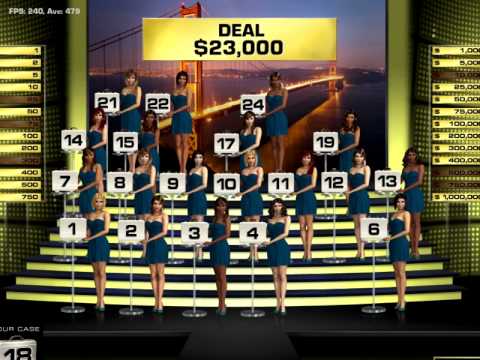
            The final presenter led a lesson that focused on probability ratios from a grade 12 data management class.  To demonstrate the idea of changing probabilities, we got to play Deal or No Deal in small groups!  In each group, one person was the banker and the other the contestant (but ultimately everyone just worked together).  Similar to the rules of the game show, the contestant had to pick a case as their own and then open 6 cases.  After 6 cases were opened, the banker offered them a deal in exchange for their case.  It was then the contestant’s job to calculate the probability of winning a case with more money than what the banker had offered and to decide if it was worth the deal or not.  I had a lot of fun with this activity!  It felt just like playing the real game – however, I think that this may have been its one downfall.  As my group started playing, we got so involved in the cases and trying to win a million dollars, that we forgot all about calculating the actual probability – which was the main point of incorporating the game into the lesson.  If I were to do this in the future, I might instead consider doing it as a class.  That way, as the teacher, I could control the speed of the game and only move onto the next case when I believed that everyone had the correct answer.  Another thing I might change is finding or creating an online version.  In the system we used, once we ripped some of the cases off, they were really hard to put back on.  As well, some cases were see-through so we knew where the million dollar case right away.

Retrieved from: https://i.ytimg.com/vi/SWr2gk07cXw/hqdefault.jpg


Overall, I really enjoyed the topics this week!  I can definitely see myself using these ideas in the future!

Friday, February 10, 2017

~My Weekly Report and Reflection 10~

This week we got to observe mini lessons on topics that could be used at in grade 11 classes.  I definitely appreciated the different approaches that my peers took and can definitely think of ways to integrate these new methods into my future teaching!
The first presentation was created for a grade 11 mixed class and focus on the concept of exponential functions.  Most presentations seen thus far have all focused on the action portion or the actual teaching of the lesson, however, this presenter chose to focus on the consolidation.  To consolidate student learning, we created math concept review booklets/folders/notes.  I’m not sure what you would technically call them but they’re really cool!  So once we had learned our topic, we each received three rectangle shaped papers.  We would fold the first one about a third of the way.  The next paper was folded a bit more than the previous rectangle, and the final paper was folded a little bit further than the second, but the same distance as between the first and second.  Once folded, we placed the folded rectangles inside of each other and stapled the sheets together so that it was like a flip chart with multiple tabs.  For each tab there was a different subject.  So for this case, the first tab was the title and topic.  The second tab was the domain and range, third was asymptotes, then x and y intercepts, exponential growth, and exponential decay.  When you would open the tab, space to fill in information about the topic was available right above the title.  I thought this was a great study tool for students!  Most reviews consist of students simply writing the information on a boring sheet of paper that is filled with a million other things to study.  In this case, everything about exponential functions can all be found on one sheet of paper.  I feel like students would really like the approach as it makes the concept less overwhelming and more appealing to study.  I can definitely see myself using this idea in the future!  If I were to change anything about it, I would have made the rectangles a tad bit bigger, just so that students have more room to write.  As well, I would have to think of a way to store these, as they’re the perfect size to get squished in the bottom of binders, bags, or lockers.
Retrieved from: https://s-media-cache-ak0.pinimg.com/736x/66/f1/65/66f165053e2f3783268d33d23f4250de.jpg

The second presentation was created for a grade 11 university level class.  This presentation focused on the concept of creating triangles when only certain sides and angles are provided (SSS, SAS, SSA).  To help demonstrate this concept he made custom cut-outs of different side lengths on construction paper.  To indicate that we knew the length of the side, the line would end in a flat surface and to indicate that a side could be any length, it ended in a point.  As well, to indicate that we knew an angle, two lines were stapled together so that we could not change it.  To indicate that we didn’t know what the angle was, lines were held together by a paper fastener so that we could change the angle.  I really enjoyed this strategy!  In my experience, students have a difficult time understanding angles and lines, especially when they can’t physically manipulate the triangle.  By using this really simple manipulative, students can better grasp how a triangle can be made when only given SSS, SAS, or SSA.  I can definitely see myself using this in the future!
Retrieved from: https://media1.britannica.com/eb-media/47/70547-004-A31FE44B.jpg

The final presentation also focused on a grade 11 university level class, however, this presenter focused on the topic of exponentials.  Three stations were set up, each providing a real world example of exponentials.  The first station was about zombies infecting the Hamilton population.  Each zombie was represented by a red tile and could infect four other people a day.  The second station was about the infamous ice bucket challenge.  Each challenger was represented by a blue tile and could challenge three other people a day.  The third station had a piece of paper and students were to record how many sections a paper would be divided into after continuously folding it in half.  Again, I really enjoyed this activity!  As you get into higher years of mathematics, I find it gets harder and harder to find real world examples for students to relate to.  When thinking of exponentials, students might not think that a virus or an internet sensation can actually be represented by math – which is why I really appreciated this presentation!  It definitely gave me some real world application ideas that I will definitely use again the future!  If I were to change anything, the only precaution I would take is with the wording of instructions at each station.  In the third station, the instructions said to estimate after explaining what to do so our group forgot to estimate until halfway through folding.  In other stations, we were not quite sure what zombies/challengers were included in our daily counts.  By slightly changing these wordings, I think this activity would go off without a hitch!
Retrieved from: http://www.vickiblackwell.com/makingbooks/images/poofbook6.jpg


Overall, I really enjoyed the topics this week!  I can definitely see myself using these ideas in the future!

Tuesday, February 07, 2017

~My Weekly Report and Reflection 9~

This week’s blog will be slightly different as I was only present for half of last night’s class.  Instead I will discuss the topics that we talked about for the first hour of class and one of the presentations that I did get the opportunity to sit in on.
            We started the class off by talking about spiraling.  Spiraling is a method of teaching the curriculum that focuses on learning concepts over time and not in specific periods of time.  What I mean by that is instead of teaching the mathematics curriculum one section or unit at a time, you almost teach all units at once.  As explained by Amy Lin (2017), you first start by teaching a little bit of everything – but only the basics.  After going through every section of the curriculum, you complete a ‘cycle.’  You then repeat the process, going over more difficult concepts as the cycles get smaller and more focused.  I think this is a really cool way to teach mathematics!  When it comes to exam time, students are always forgetting what they learned in unit one.  By using spiraling, it eliminates this problem as students are consistently using what they’ve learned in every unit throughout the duration of the semester.  As well it creates a connection between different types of math.  By teaching this way, students are able to learn about not only these links between topics, but between mathematics and the real world.  As a very new teacher, this method is very intimidating to me.  I love the idea of it, and all of the benefits from its use makes me want to try it, however, I haven’t become comfortable with the entire curriculum yet.  I feel as though before I would even attempt spiraling in my own classroom, I would first need to teach the semester a couple of times in order to be comfortable enough with the curriculum to explore different methods of teaching.  This is definitely something that I’m going to remember in the future and I hope to give it a try one day!
Retrieved from: http://imageenvision.com/450/42328-clip-art-graphic-of-a-spiraling-hurricane-by-maria-bell.jpg

            I was also fortunate enough to see one presentation.  Last night’s presentations were at the grade ten level, so this lesson covered factoring trinomial quadratic equations.  When I learnt factoring in high school, we were to taught to find two numbers that multiplied to c and added to b in the equation y=ax^2+bx+c.  However, this presenter taught us how to do this factoring with algebra tiles – a method I’ve never seen before!  I thought it was such a cool tool to use, and it would have been so useful to me as a student when I was first learning how to factor.  To use algebra tiles to factor, you simply arrange all of the tiles that correspond to each expression in the equation to make a rectangle.  For example, if you had x^2+5x+6, you would have one large square for x^2, 5 rectangles for 5x, and 6 small squares.  When you arrange these tiles into a rectangle, the sides that don’t contain the x^2 tile will make up your factored equation (see diagram below).  For this example, the answer would be (x+2) (x+3).  I can’t reiterate enough how cool I think this is.  I will definitely take this with me and use it for my future students – if not for individual student use, at least to help demonstrate the concept with a visual.
Retrieved from: https://image.slidesharecdn.com/algebra-tiles-pp-version-2-1204911748337908-3/95/algebra-tiles-pp-version-2-52-728.jpg?cb=1204882949


Overall, I really enjoyed the topics this week!  I can definitely see myself using these ideas in the future!

Sunday, January 29, 2017

~My Weekly Report and Reflection 8~

This week we got to observe mini lessons on topics that could be used at the grade nine and ten levels.  Although some of these activities I have used in my classes before, I definitely appreciated the different approaches that my peers took and can definitely think of ways to integrate new methods into my future teaching.
The first two presentations both focused on the concept of the sum of the interior angles of a triangle and how the number of sides a shape has, has a relationship with its sum of interior angles.  The two presenters took two different approaches.  The first one tackled the discovery of this concept like one would in a science lab.  The students would first understand the problem they were trying to solve, create a hypothesis based on what they thought, and use the tools provided to investigate the problem.  In this case, we were given a variety of shapes and protractors and the freedom to explore however we liked.  The second presenter did things a bit differently.  Instead of letting us have complete reign of the learning, he first focused us on triangles.  Students were told to create any sized triangle they’d like; then, cut it out, mark each interior angle, and cut off each corner of the triangle.  When the corners were pieced together, it made a straight line, showing that all interior angles of a triangle added up to 180 degrees.  Knowing that, he told us to explore some other shapes, and try to find how many triangles can be found in each shape.  Since we knew the sum of the interior angles in a triangle, we could calculate the sum of interior angles in other shapes as well.  We were then able to explore the relationship between the number of sides and the number of triangles in a shape.  If I were to teach this in the future, there were some things I would take from both approaches to this concept.  I really enjoyed how the first presenter gave students the freedom to do whatever they thought.  This is a great way to promote student creativity.  However, if I was told to explore in grade nine, I probably would have given up because I wouldn’t have known where to start.  For that reason, I would try to do more of the second presenter’s approach.  First I would focus on the interior angles of a triangle, have students understand that concept, and then let them explore the other triangles for themselves, giving them time to be creative before coming back together again and discussing findings.

Retrieved from: http://www.mathwarehouse.com/geometry/triangles/angles/images/interior-angles-of-triangle-picture.png

The third presenter did a round of speed dating!  This activity went over creating an equation using a slope and y-intercept, and plotting that line.  I thoroughly enjoyed this activity – it was so much fun and didn’t feel like practicing math at all!  Desks were arranged in a “U” shape and students on one side of the desks were given a card with a slope, the other side a card with a y-intercept.  Pairs would be given one minute to share information, create an equation, and plot the line.  If the line went through any hearts on the grid provided, the pair was a match!  This continued until everyone had seen each other once.  I loved this activity sooo much!  It was simply drill and practice math questions, but it was so much fun that it didn’t feel like that.  When I use this in the future (and I say when, because I definitely will) there are only minor tweaks that I would make.  The first being the handout we were provided.  In the chart, I would have three columns instead of two: Partner’s Name, Equation, and add in a column for Is it a Match?  I would do this, just so that students would have somewhere to record their matches.  The other small change would be to provide students with slightly more time with each partner.  We were having so much fun that for the first 20-30 seconds we would talk with our partners about how it was going so far.  As math teachers, we were all able to create an equation and plot it in the next 30 seconds, but even then, we were running out of time.  For students who are learning this for the first time, I would want to give them some more time to properly do the math.

Retrieved from: http://cyamemphis.org/wp-content/uploads/2015/07/Speed-Dating-2.jpg

The final presentation had a great framework, but I was slightly confused on the concept.  After discussing the properties of three right angle triangles, said triangles were cut out and specific interior angles were arranged to form a right angle.  Students were then given geoboards to try to prove how these triangles worked using similar triangles.  So besides the use of right angled and similar triangles, I was confused as to what concept this activity was addressing.  As well, myself, and those seated around me, were unable to prove it ourselves, so I can only imagine the difficulty most grade ten students would have with this activity.  For that reason, I probably wouldn’t use this activity in the future.  However, I really liked the layout of the lesson.  Most of the time, teachers provide students with the proofs to certain ideas or equations without letting the students try to figure it out themselves.  I really appreciated how the presenter let the students try themselves, while using manipulatives that are a lot easier to work with than writing theories on paper.  So the style in which the presenter approached this topic is definitely something I can see myself incorporating in future lessons.

Retrieved from: http://www.educatorsoutlet.com/images//products/10915DD.jpg


Overall, I really enjoyed all of the activities that were shared!  I can definitely see myself using these ideas in the future!

Wednesday, January 25, 2017

~My Weekly Report and Reflection 7~ *New semester start*

            This week we got to observe mini lessons on topics that could be used at the grade seven and eight level.  Although these are not the grades I wish to teach in the future, I definitely appreciated the different ideas that my peers brought to the class and can definitely think of ways to integrate their ideas into different grade levels.

Holes

            The first presentation was a real-world problem that approached the concepts of conversion and volume in an interesting way.   Students were to use the story from the novel and movie “Holes” to determine how many of X-Ray’s holes Stanley could fill in a year if X-Ray’s shovel was an inch shorter than Stanley’s.  I thought this was such a cool idea because it had a practical purpose to it and if one was invested in the plot (like most of our class was growing up), it was definitely motivating to try and answer.  If I were to use this idea in the future, however, I would make some changes.  I would definitely pick a real world application that had more significance to my students.  This story was a great pick for our class, but for today’s generation, they may not have even heard of it.  Also, the amount of conversion from metric to imperial units was a bit problematic for me.  Either I would decide to completely leave those conversions out, or instead, make this idea more of a paired performance task where students have to work with things that are foreign to them and try to solve the problem.  Lastly, the presenter brought in measuring cups to visually represent what the holes looked like and the difference between X-Ray and Stanley’s holes.  However, he didn’t go into much detail about it.  I would have loved to see what he could have done with those manipulatives to help students understand better.
Retrieved from: https://www.walden.com/wp-content/uploads/2003/04/holes-hero.jpg

The Adventure of Steve the Stick Figure

Retrieved from: http://images.clipartpanda
.com/sad-girl-stick-figure-image.png
            The second presentation followed Steve the Stick figure and his adventure around the classroom to teach transformations.  Students would start at one station and would have to determine what the transformation at the station was asking for, and where Steve (the coordinates) would end up.  After travelling around the room, students would answer some questions on their sheets using words instead of numbers and transformations.  I really enjoyed this activity as well!  I think it’s a great idea to get students up and moving around the classroom.  However, if I were to use this idea in the future I would make some changes.  I might consider doing this activity in a larger room, so that students would have more room when at the same station.  As well, depending on the behaviour of the students, I would even consider doing this activity around the school – I think students would have a lot of fun travelling to different locations in the building.  I would also be wary on what the symbol was that we are transforming.  In this case it was Steve the stick figure where there was a “head” and a “butt.”  Sometimes this was confusing to keep track of when drawing.  I would maybe consider changing the shape for next time.

The Game of Life

            The third presentation was the game of life!  This activity taught idea of percents, ratios, and rates in a practical real world situation.  I thoroughly enjoyed this activity.  Each table (or family) was given a career and a monthly salary.  Each “month,” the families would have to pay their rent and internet charges.  After that, they would have to buy clothes and food for their family; however, there were flyers with coupons for certain percentages off as well as sales.  Lastly, families would have to save some money in the bank each month for future uses.  At the end of the game, it was shared what families had what incomes and who was struggling to pay their bills.  I thought this was a fantastic activity that I will definitely use again in the future.  A lot of the time, students don’t understand why they learn the things they do because they don’t feel like they will ever use it again in the future.  This is such a practical day to day application that students will actually learn from and use in their future!  If I were to use this in the future, I would make some small tweaks.  I would definitely make the groups a bit smaller than we had them.  I think groups are good for discussion and debate on how money should be spent but more than 3 per group is too many voices in my opinion.  As well, I would have everything pre-arranged in folders and each group would be given a folder with their details as well as flyers and sales for the following months and students would instead have to budget their pay for the next year.  This may become more of a performance task type activity, but I think that the general discussion they would have, and the experience of budgeting for a longer period of time would be a great experience for students to have.
Retrieved from: http://cdn.edgecast.steamstatic.com/steam/apps/403120/header.jpg?t=1465471547

Battleship

            The final presentation was also a great one!  This presentation provided a fun way to approach practice drills of solving single variable equations.  Everyone was given a 7x8 grid and basically played the game Battleship in pairs.  The catch was, if you hit your opponent’s ship, you had to correctly solve an equation for x in order for your hit to count.  I really enjoyed this game!  I thought it was a lot of fun and as a very competitive person, I was very motivated to keep playing.  However, if I were to use this idea in the future, I would definitely make some changes to the handout.  The activity itself was wonderful, however, as time went on, our battleship sheet began to get very confusing, and our equation sheet was forgotten.  Instead of having the two on separate sheets I would have combined the equations with the grid so that in each box there was an equation to be solved.  This way, instead of switching back and forth, the questions would be present in each box if that box was selected.  I would also make a much smaller grid in the corner of the page for students to put their own ship’s placement.  Having to share where you had guess AND where your opponent had guessed on the same grid got confusing fast.  By separating the two, it would be much easier for students to keep track of what was happening.
Retrieved from: http://static.kidspot.com.au/cm_assets/32032/battleship-game-main-jpg-20151022131744.jpg~q75,dx720y-u0r1g0,c--.jpg


Overall, I really enjoyed all of the activities that were shared!  I can definitely see myself using all of these ideas in the future!